Bay Area Toll Authority (BATA)
San Francisco-Oakland Bay Bridge Metering Lights System Upgrade
Project
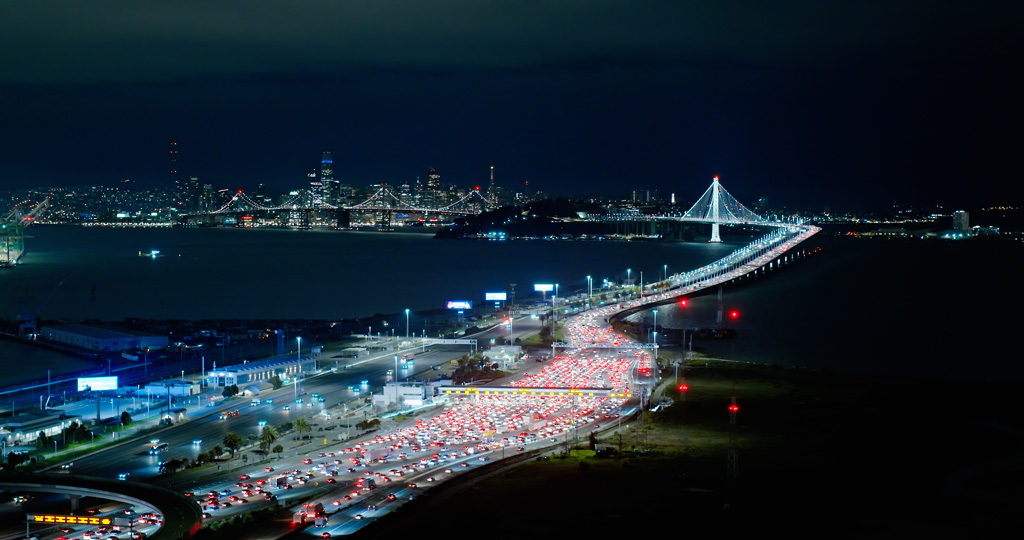
The San Francisco-Oakland Bay Bridge (SFOBB) in California is one of the most heavily traveled corridors in the United States. The purpose of this project is to implement a new Metering Lights system at this bridge that accounts for the bridge’s capacity and alignment, increases toll plaza throughput, adapts to traffic incidents, reduces queuing at the toll plaza, and accommodates differential metering rates for different classes of users (buses, HOVs, FasTrak, and cash users)
Our Work
As a member of a project team, ETG led the development of micro-simulation models using VISSIM to help demonstrate and evaluate various metering algorithms. The simulation models covered three (3) approaches to the SFOBB toll plaza and metering lights: (1) I-80: University Avenue to Treasure Island (TI); (2) I-580: SR-24 to TI; and (3) I-880: 7th Street to TI. The goal was to select the best metering algorithm for the new Metering Lights system for implementation at this bridge, where 16 lanes at the metering lights merge down to five lanes on the bridge.
The simulation effort involved data collection and analysis, model development, calibration, and validation, followed by testing of metering algorithms under both recurring and non-recurring traffic conditions. The analysis identified a fuzzy-logic–based metering algorithm as the preferred option for implementation.
ETG also led the Before/After study in coordination with MTC and Caltrans, preparing the evaluation plan and conducting the analysis once the new metering system was operational and traffic patterns had stabilized. The study assessed changes in key performance measures, including metering activation and deactivation times, metering rates, vehicle throughput, travel times and delays, travel time reliability, queue lengths, and overall congestion duration.